
What is fatty liver disease and why does diagnosis matter?
Fatty liver disease, also called hepatic steatosis, occurs when excess fat accumulates in liver cells. The condition is common; estimates suggest up to a quarter of adults in many countries have some degree of fat in the liver. Most people feel fine, but a small‑to‑moderate proportion will progress to inflammation (non‑alcoholic steatohepatitis, NASH), fibrosis, and eventually cirrhosis or liver cancer. Early detection lets clinicians intervene with lifestyle changes, medication, or specialist referral before irreversible damage develops.
How do doctors decide which tests to order?
Diagnosis follows a stepwise approach that balances accuracy, invasiveness, and cost. The typical pathway looks like this:
- Clinical assessment – risk factors, symptoms, and physical exam.
- Blood‑based screening – liver enzymes, metabolic panels, and fibrosis scores.
- Imaging – ultrasound, controlled‑attenuation parameter (CAP) via FibroScan, or MRI‑based techniques.
- Specialist evaluation – when non‑invasive results are ambiguous or advanced disease is suspected.
- Liver biopsy – reserved for definitive staging when other tools cannot provide a clear picture.
The order of these steps can vary. For example, a primary‑care physician may order blood work first and refer the patient for an imaging study only if results suggest abnormal liver function.
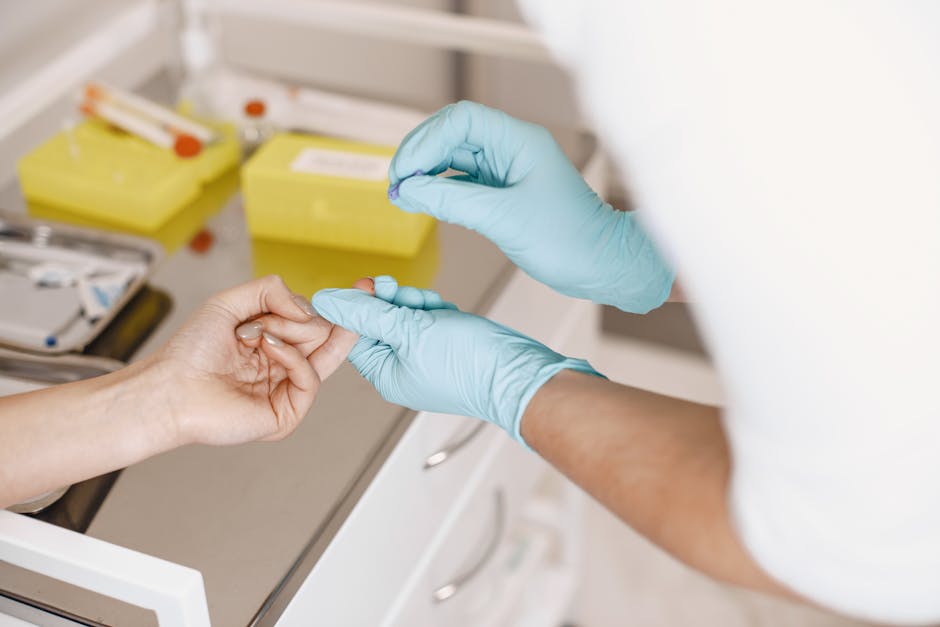
Blood tests: the first line of investigation
Blood work is inexpensive, widely available, and gives clinicians a broad view of liver health and metabolic risk.
Key liver enzymes
- Alanine aminotransferase (ALT) – rises when liver cells are injured.
- Aspartate aminotransferase (AST) – also increases with injury; the AST/ALT ratio helps differentiate disease types.
- Gamma‑glutamyl transferase (GGT) – elevated in fatty liver, especially when alcohol use is present.
- Alkaline phosphatase (ALP) – can be raised with bile‑duct problems; a normal level does not rule out fatty liver.
In early steatosis, enzyme levels may be completely normal. Therefore, normal labs do not exclude disease, but markedly elevated values raise suspicion and trigger further testing.
Metabolic and inflammatory markers
- Fasting glucose and hemoglobin A1c – identify insulin resistance or diabetes, both strong risk factors.
- Lipid profile – high triglycerides and low HDL are common in fatty liver.
- Serum ferritin – sometimes elevated, reflecting hepatic inflammation.
- C‑reactive protein (CRP) – a nonspecific marker of systemic inflammation that can be higher in NASH.
Non‑invasive fibrosis scores
Several algorithms combine routine lab values with age, BMI, and diabetes status to estimate fibrosis risk. The most widely used are:
- FIB‑4 – uses age, AST, ALT, and platelet count.
- NAFLD Fibrosis Score (NFS) – adds BMI, impaired fasting glucose/diabetes, and albumin.
- AST‑to‑Platelet Ratio Index (APRI) – simpler, primarily for viral hepatitis but sometimes applied to NAFLD.
These scores categorize patients into low, intermediate, or high risk for advanced fibrosis. Low‑risk patients often remain under surveillance, while high‑risk individuals proceed to imaging or biopsy.
Ultrasound: the workhorse imaging tool
Abdominal ultrasound is the most common first‑line imaging study for suspected fatty liver. It is safe, inexpensive, and does not use ionising radiation.
What ultrasound shows
- Increased echogenicity of the liver parenchyma compared with the right kidney – the classic “bright liver” sign.
- Attenuation of the ultrasound beam, which reduces visibility of deeper structures.
- Evidence of coarse texture, suggesting fibrosis or cirrhosis.
Ultrasound can detect moderate to severe steatosis (usually >30% fat). It is less reliable for mild fat accumulation, and its accuracy is operator‑dependent.
Limitations
- Cannot quantify fat percentage precisely.
- Obesity can degrade image quality, leading to false‑negative results.
- Cannot reliably stage fibrosis; it may miss early scarring.
FibroScan (Transient Elastography): measuring stiffness and fat together
FibroScan is a specialised ultrasound‑based device that provides two quantitative readings in a single, painless exam:
Controlled Attenuation Parameter (CAP)
CAP measures the attenuation of the ultrasound signal as it passes through liver tissue. Higher CAP values correlate with greater fat content. The test reports CAP in decibels per meter (dB/m), with typical cut‑offs:
- ≈248 dB/m – mild steatosis (≥10% fat).
- ≈280 dB/m – moderate steatosis (≥33% fat).
- ≈310 dB/m – severe steatosis (≥66% fat).
Exact thresholds vary by manufacturer and patient characteristics, but CAP adds an objective, repeatable measure that ultrasound alone cannot provide.
Liver stiffness measurement (LSM)
LSM quantifies how fast a mechanical shear wave travels through the liver. Stiffer tissue indicates fibrosis. Results are expressed in kilopascals (kPa). Approximate ranges are:
- 2–5 kPa – normal.
- 5–7 kPa – mild fibrosis (F1‑F2).
- 7–9.5 kPa – moderate fibrosis (F2‑F3).
- >9.5 kPa – advanced fibrosis or cirrhosis (F3‑F4).
These cut‑offs are not absolute; chronic inflammation, congestion, or high ALT levels can transiently raise stiffness.
When FibroScan is preferred
- Patients with an indeterminate fibrosis score from blood tests.
- Those who cannot undergo MRI (e.g., claustrophobia, implanted devices).
- When serial monitoring is needed; FibroScan can track changes over months or years.
MRI‑based techniques: the most accurate non‑invasive options
Magnetic resonance imaging (MRI) offers two advanced methods for fatty liver assessment:
Proton density fat fraction (PDFF)
PDFF quantifies the proportion of hydrogen atoms in fat versus water, giving a precise fat percentage (0–100%). It detects even minimal steatosis and is reproducible across scanners.
Magnetic resonance elastography (MRE)
MRE uses low‑frequency vibrations to create shear waves, then maps stiffness across the liver. It outperforms FibroScan in obese patients and can differentiate early fibrosis stages.
Although highly accurate, MRI–PDFF and MRE are expensive, less available, and usually reserved for research, clinical trials, or complex cases where other modalities give conflicting results.
Liver biopsy: the definitive diagnostic tool
When non‑invasive tests cannot clarify disease severity, a percutaneous liver biopsy may be performed. It remains the gold standard for diagnosing NASH and grading fibrosis.
Procedure overview
- Performed under local anaesthesia, sometimes with mild sedation.
- A 16‑18 g needle extracts a core of liver tissue (usually 1–2 cm long).
- Samples are examined by a pathologist for steatosis, lobular inflammation, ballooning degeneration, and fibrosis.
Scoring systems used on biopsy
- NAFLD Activity Score (NAS) – rates steatosis (0–3), inflammation (0–3), and ballooning (0–2). A total ≥5 suggests NASH.
- Fibrosis stage (F0‑F4) – assesses scar tissue from none (F0) to cirrhosis (F4).
Risks and limitations
- Bleeding (≈1% risk), pain, or infection.
- Sampling error – a small core may miss focal fibrosis or inflammation.
- Subjectivity in interpretation; inter‑observer variability exists.
- Cost and need for specialised pathology.
Because of these drawbacks, biopsy is rarely the first step. It is reserved for patients where treatment decisions hinge on precise histology, such as eligibility for clinical trials or when imaging suggests advanced disease but scores are uncertain.
Putting the pieces together: a typical diagnostic algorithm
| Step | Typical Findings | Next Action |
|---|---|---|
| Clinical evaluation + routine labs | Elevated ALT/AST, metabolic syndrome features | Calculate FIB‑4 or NFS |
| Low fibrosis score (FIB‑4 <1.3, NFS <‑1.455) | Low risk of advanced fibrosis | Lifestyle counselling; repeat labs in 12 months |
| Intermediate score (FIB‑4 1.3‑2.67, NFS –1.455‑0.675) | Uncertain risk | Order imaging – abdominal ultrasound or FibroScan |
| Ultrasound shows bright liver; FibroScan CAP ≥280 dB/m, LSM >7 kPa | Suggests moderate steatosis and possible fibrosis | Refer to hepatology; consider repeat FibroScan or MRI |
| High fibrosis score (FIB‑4 >2.67, NFS >0.675) or LSM >9.5 kPa | High probability of advanced fibrosis | Specialist evaluation; discuss biopsy if diagnosis remains unclear |
| Biopsy performed | Histology confirms NASH and fibrosis stage | Guides treatment selection and monitoring schedule |
Special considerations in particular populations
Obese patients
Obesity reduces ultrasound quality and can limit FibroScan probe reach. Many centres use an XL‑probe for FibroScan, which penetrates deeper tissue but has slightly different cut‑offs. In very high BMI (>40 kg/m²), MRI‑PDFF or MRE may be preferred.
Patients with alcohol use
Alcohol can raise GGT and AST/ALT ratios, mimicking fatty liver. Comprehensive history and possibly a carbohydrate‑deficient transferrin test help differentiate alcohol‑related liver disease from non‑alcoholic fatty liver disease (NAFLD).
Pediatric and adolescent patients
Fatty liver is rising in children with obesity. Guidelines advise using age‑adjusted fibrosis scores and opting for ultrasound first. FibroScan with pediatric probes is increasingly available, but biopsy is reserved for severe cases.
How often should monitoring occur?
Frequency depends on disease stage and risk factors.
- Low‑risk NAFLD – repeat liver enzymes and metabolic labs annually; imaging only if labs worsen.
- Intermediate risk – FibroScan or ultrasound every 1–2 years, plus labs every 6–12 months.
- High‑risk or confirmed NASH with fibrosis – specialist follow‑up every 3–6 months, imaging annually, and consideration of repeat FibroScan or MRI to track fibrosis progression.
Common misconceptions clarified
- “If my blood tests are normal, I don’t have fatty liver.” Normal enzymes are common even with significant fat; imaging is needed for confirmation.
- “Ultrasound can tell me how bad my fibrosis is.” Ultrasound can suggest cirrhosis but cannot stage early fibrosis reliably.
- “A liver biopsy is always required.” Biopsy is only necessary when non‑invasive results are inconclusive or when precise histology will change management.
- “CAP numbers are the same for everyone.” CAP thresholds vary with body habitus, probe type, and machine calibration; clinicians interpret them in context.
Key take‑aways for patients and clinicians
- Start with simple, inexpensive tests: liver enzymes and fibrosis scores.
- Use ultrasound as the first imaging modality; consider FibroScan for quantitative fat and stiffness.
- Reserve MRI techniques for cases where ultrasound or FibroScan are limited or when precise quantification is needed.
- Reserve liver biopsy for situations where treatment decisions require definitive histology.
- Monitor disease regularly; early lifestyle intervention remains the cornerstone of management.